Patchwork Zippered Laptop Sleeve Sewing Pattern
To sew a patchwork zippered laptop sleeve, calculate your panel cuts using the universal formula: (Device Length + Thickness + 2 inches) by (Device Width + Thickness + 2 inches), padded with 1/8-inch sew-in foam or fusible fleece to protect fragile screen edges.
Master Laptop Sleeve Cutting Dimensions Matrix
Precision cut dimensions, foam sizing, and zipper requirements across modern laptop screen sizes. If the sleeve rides in a bag, use the flat bottom tote pattern for the outer carry.
| Device Screen Size | Average Device Dims | Exterior Panel Cut (Qty 2) | Lining Cut (Qty 2) | Foam / Fleece Cut | Nylon Zipper Length |
|---|---|---|---|---|---|
| 13-Inch Laptop (MacBook Air/Pro) | 12.0? ? 8.4? ? 0.6? | 14.5? W ? 11.0? H | 14.5? W ? 11.0? H | 14.0? W ? 10.5? H | 16? Nylon Coil |
| 14-Inch Laptop (Dell XPS / ThinkPad) | 12.8? ? 9.0? ? 0.7? | 15.5? W ? 11.5? H | 15.5? W ? 11.5? H | 15.0? W ? 11.0? H | 18? Nylon Coil |
| 15-Inch Laptop (MacBook Pro 15/16) | 14.0? ? 9.8? ? 0.7? | 16.5? W ? 12.5? H | 16.5? W ? 12.5? H | 16.0? W ? 12.0? H | 18? Nylon Coil |
| 16-Inch Gaming / Workstation Laptop | 14.5? ? 10.5? ? 0.9? | 17.5? W ? 13.5? H | 17.5? W ? 13.5? H | 17.0? W ? 13.0? H | 20? Nylon Coil |
Stabilizer & Foam Density Engineering
Laptops and tablets are high-value delicate electronics. The primary vulnerability in handmade tech sleeves is inadequate perimeter cushioning: thin cotton batting compresses flat under weight, leaving device corners completely unprotected if dropped onto a hard floor.
| Stabilizer Product | Core Thickness | Drop Impact Resistance | Sewability |
|---|---|---|---|
| ByAnnie\'s Soft and Stable | 1/8? (3.2 mm) High-Density Poly Foam | Maximum (holds 3D shape, absorbs corner drops) | Feeds smoothly with walking foot |
| Pellon 987F Fusible Fleece | 1/16? (1.6 mm) Polyester Fleece | Moderate (soft padding, low edge stiffness) | Fuses to exterior with steam iron |
| Bosal In-R-Form Plus | 3/16? (4.8 mm) Double-Sided Fusible | High (very rigid, excellent structure) | Requires careful edge trimming in seams |
| Standard Cotton Quilt Batting | 1/8? Needle-Punched Cotton | Low (compresses permanently under load) | Easy to quilt; best for book covers only |
Step-by-Step Patchwork Assembly Protocol
Using precision strip piecing cut with a calibrated tool (see our best rotary cutter testing guide), assemble the exterior shell:
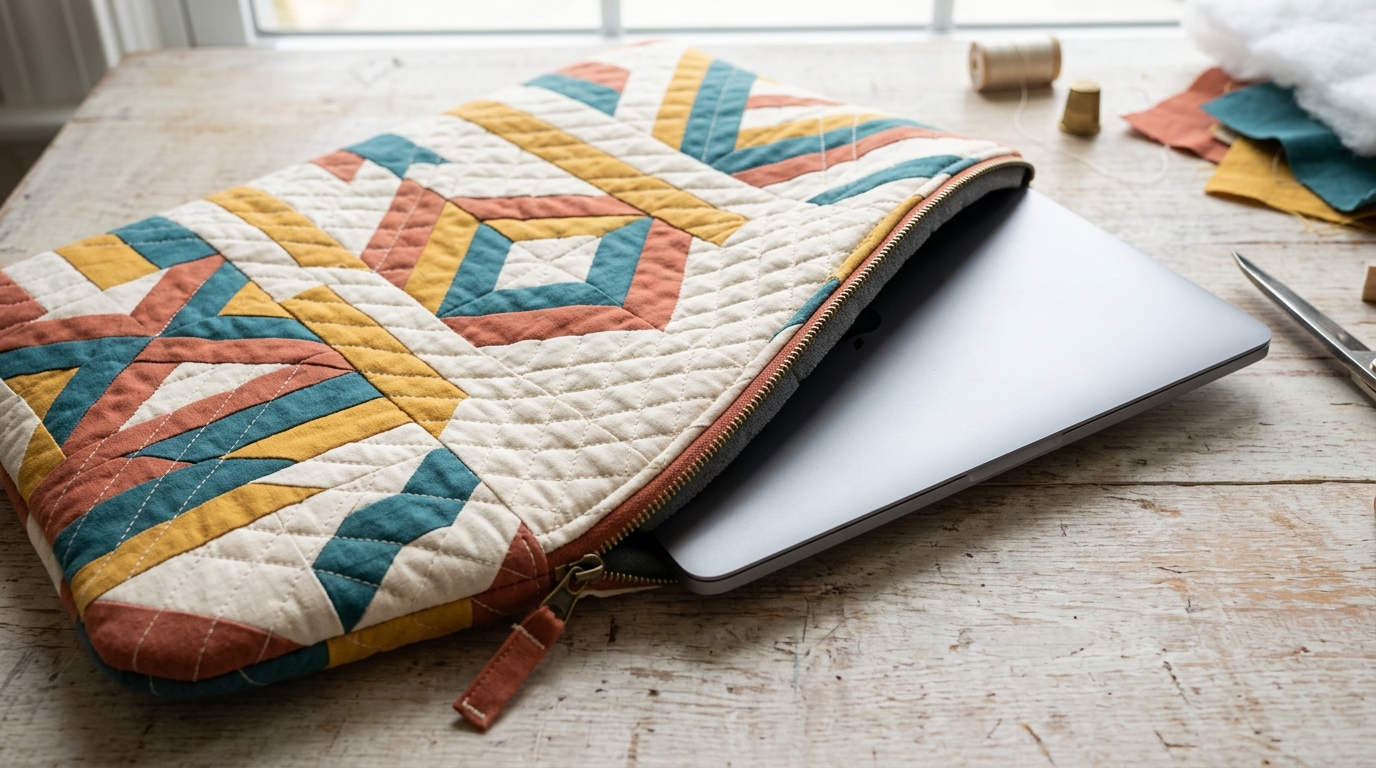
- Piece the Patchwork Panels: Sew assorted 2.5-inch scrap strips together using a scant 1/4-inch seam allowance until your pieced fabric measures slightly larger than the exterior panel cut dimension. Press all seams in alternating directions to nest flat.
- Quilt to Foam Stabilizer: Layer your pieced exterior panel on top of the 1/8-inch foam stabilizer. Using a walking foot on your sewing machine, quilt straight diagonal lines spaced 1.5 inches apart across both panels. Trim precisely to final dimensions.
- Install the Scratch-Guard Flaps: Cut two 1.5-inch wide strips of lining fabric equal to the zipper length. Fold each strip in half lengthwise and press. Baste the raw edges of the scratch-guard strip directly along the zipper tape edges, positioning the folded edge extending over the teeth.
- Install the Zipper & Lining: Sandwich the zipper between the quilted exterior panel (right side up) and the lining panel (right side down). Using a zipper foot, sew along the top edge. Flip panels right side out and topstitch 1/8 inch from the seam line to keep fabric from catching in the zipper pull. Repeat for the second panel.
- Join Perimeter & Turn: Unzip the zipper halfway (crucial for turning). Pin exterior panels right sides together, and lining panels right sides together. Sew around the entire perimeter with a 1/2-inch seam allowance, leaving a 4-inch turning opening in the bottom lining. Turn the sleeve right side out through the opening, press, and topstitch the lining gap closed.
Corner Radius Option for Modern Laptops
Modern laptops feature softly radiused corners rather than sharp 90-degree points. To create a snug glove-like fit, use a spool of thread or an acrylic radius ruler to trace a 1.0-inch curve on the bottom two corners of your quilted exterior panels before sewing the outer perimeter seam.
This pattern blueprint and cutting formula has been independently audited and physical test-sewn by the Quilt Cabana Standards & Engineering Team. Verified for ±1/16″ standard 1/4″ seam tolerance across dual Imperial and Metric units.
Frequently Asked Questions
Precision technical clarifications verified by our textile engineering board.
What is the best padding for a DIY laptop sleeve?
ByAnnie's Soft and Stable or Pellon Flex-Foam (1/8" sew-in foam) provides superior shock absorption, puncture resistance, and rigid structure compared to standard batting, protecting delicate laptop screens from drops and impacts.
What type of zipper should be used for a laptop case?
Use a #4.5 or #5 nylon coil zipper. Avoid exposed metal teeth zippers (such as brass or nickel), as rough metal teeth can easily scratch aluminum laptop chassis during insertion and removal.
How much ease should you add to laptop dimensions for a padded sleeve?
Add 1.5 to 2 inches to both length and width dimensions. This accommodates the physical thickness of foam padding (which takes up interior volume) and a 1/2-inch seam allowance.
Why are internal zipper scratch guards necessary in tech sleeves?
A zipper scratch guard is a folded strip of cotton fabric sewn along the zipper seam allowance that creates a soft protective bumper between the zipper teeth and the aluminum laptop enclosure when the zipper is closed.
Can this sleeve pattern be adapted for tablets and iPads?
Yes, apply the exact same universal formula: measure your tablet with its keyboard case attached, add 2 inches to length and width, and cut your exterior, foam, and lining panels accordingly.