How Much Fabric for a Pillowcase
How much fabric for a pillowcase depends on your insert dimensions: a standard pillowcase requires 3/4 yard (27 inches / 68.5 cm) of 44-inch wide fabric for the main body, 1/3 yard (9 to 12 inches / 23 to 30.5 cm) for a contrast cuff, and 1/8 yard (2 inches / 5 cm) for an optional accent trim.
Pillowcase Fabric & Yardage Calculator
Calculate exact main body cut, cuff, and accent trim dimensions with live cut diagrams.
Standard Pillowcase Fabric Requirements Chart
The table below provides exact cutting dimensions for the three standard North American pillow insert sizes using standard 42″ to 44″ Usable Width of Fabric (WOF):
| Pillowcase Size | Finished Size | Main Body Cut | Cuff Cut | Accent Trim Cut | Total Yardage (Single) |
|---|---|---|---|---|---|
| Standard | 20″ × 30″ (51 × 76 cm) | 27″ × 42″ (3/4 yd) | 9″ × 42″ (1/4 yd) | 2″ × 42″ (1/8 yd) | 1.00 Yard |
| Queen | 20″ × 34″ (51 × 86 cm) | 31″ × 42″ (7/8 yd) | 9″ × 42″ (1/4 yd) | 2″ × 42″ (1/8 yd) | 1.125 Yards |
| King | 20″ × 40″ (51 × 102 cm) | 37″ × 42″ (1 1/8 yds) | 9″ × 42″ (1/4 yd) | 2″ × 42″ (1/8 yd) | 1.375 Yards |
| 12″ square | 12″ × 12″ (30 × 30 cm) | 15″ × 26″ | 9″ × 26″ | 2″ × 26″ | 0.72 Yard |
What Size Do You Cut for a Standard Pillowcase?
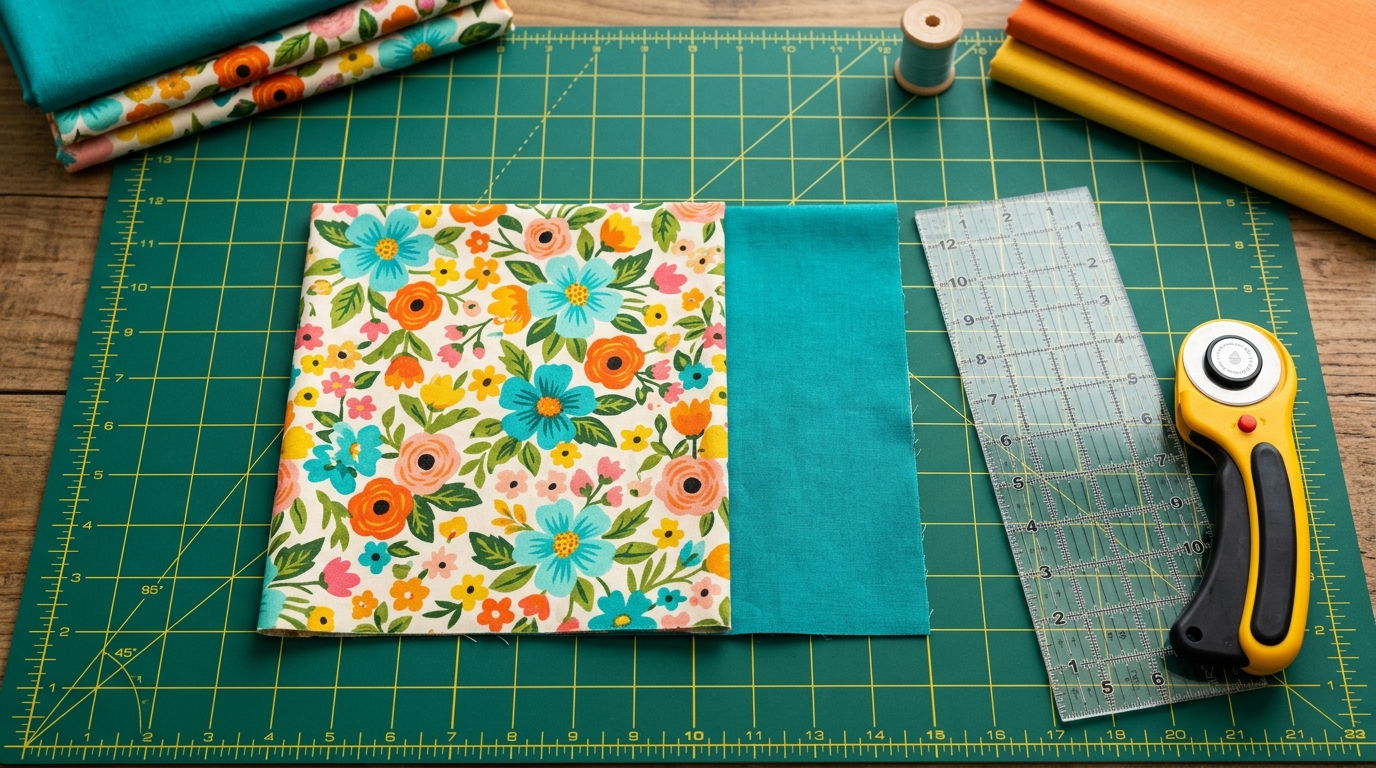
Cut the main body 27″ × 42″ (68.5 × 106.7 cm) and the contrast cuff 9″ × 42″ (22.9 × 106.7 cm). The 42 inch side wraps a 20 inch pillow: 20 doubled is 40, plus seam allowance. The 27 inch side is the length of the body for a 20 × 30 inch insert. Those two cuts are 3/4 yard and a 9-inch quarter yard on 44 or 45 inch wide cloth. The seam widths used below are the ones on the measurement standards page.
Can Half a Yard Make a Standard Pillowcase?
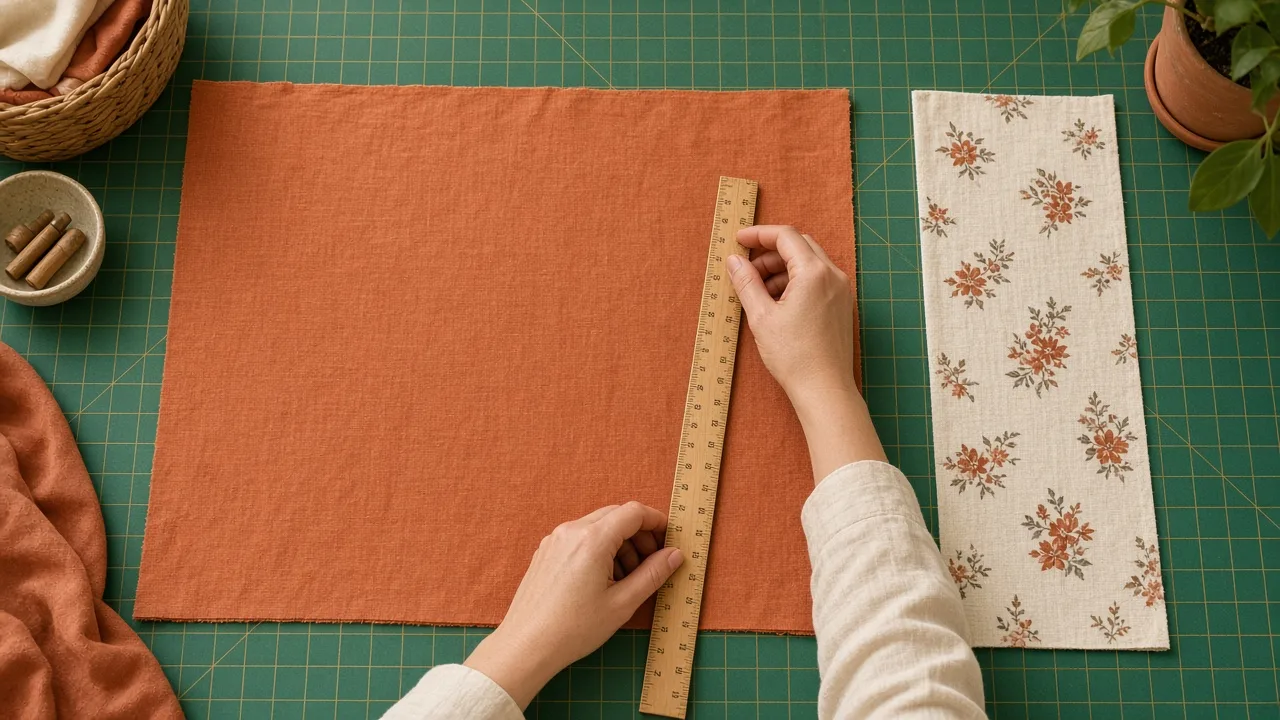
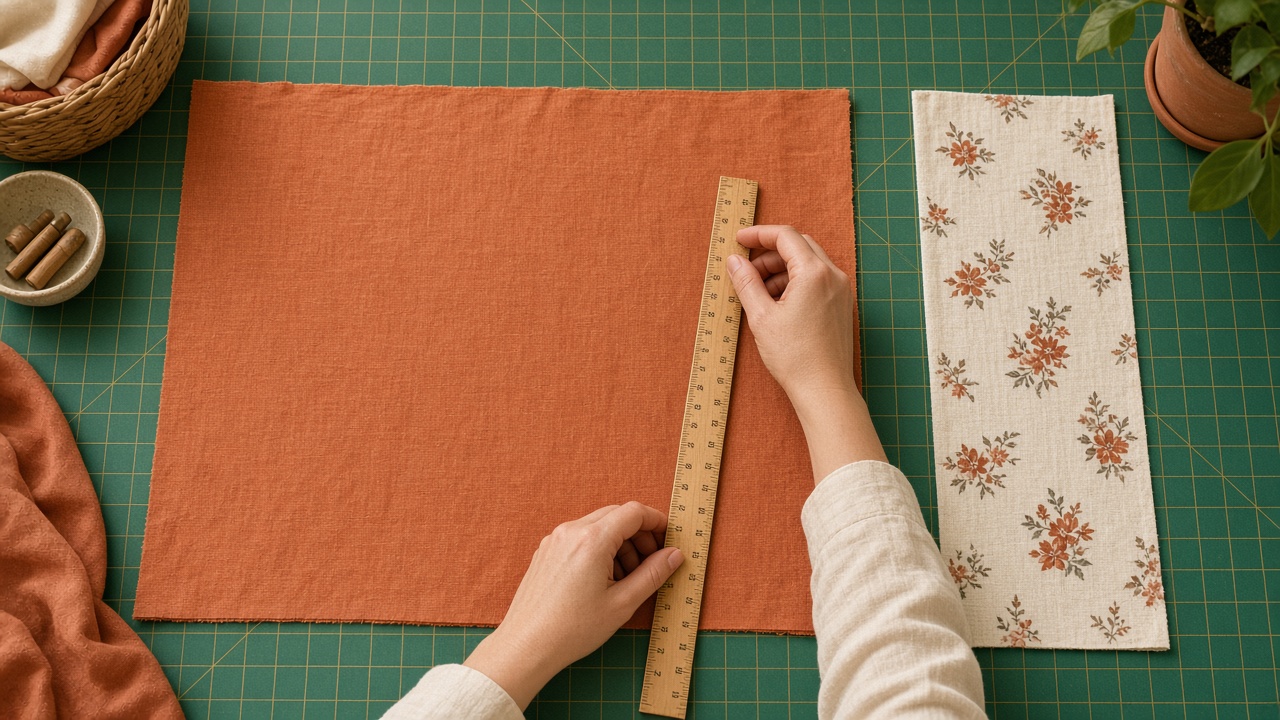
No. A yard is 36 inches, so half a yard is 18 inches. The body cut in the chart is 27 inches, which is 9 inches longer than half a yard. One standard case with no contrast cuff still needs a full yard, which is the 36 inch length in the FAQ above. Two plain standard cases from 44 or 45 inch wide fabric take 2 yards, because each body is cut 42 inches across the width and the width of the bolt does not shorten the 27 inch length. More fabric math sits on the calculator hub.
Queen Pillowcase Yards and a Body Pillow
A queen row on this chart is a 31″ × 42″ body (7/8 yard) plus the same 9 inch cuff, 1.125 yards for one case. The queen insert is 4 inches longer than standard (34 versus 30), and the body cut is 4 inches longer (31 versus 27). King follows the same step: 10 extra inches of insert, 10 extra inches of body cut.
A body pillow is a different insert. Deira Group lists 20 × 54 inches as a standard body-pillow size, and Blossom Home Textile sells the same 20 × 54 inch insert. Apply the inch-for-inch length rule already in this chart: 54 is 24 inches longer than a 30 inch standard insert, so the body cut is 27 + 24 = 51 inches by 42 inches, plus the 9 inch cuff. That is about 1 2/3 yards for one body-pillow case, not the 1 yard standard case. Cut it with a 45mm rotary cutter after the fabric is pressed.
How Much Fabric for a 12×12 Pillowcase
A 12 by 12 inch pillowcase is not a bed size. The custom rule already in the calculator on this page is: body inches = finished length minus half the cuff, plus 1.5, and never under 15. For a 12-inch length and a 9-inch cuff that is 12 − 4.5 + 1.5 = 9, so the floor applies and the body is 15 inches. The width is 26 inches: 12 doubled, plus the same 2 inches that turn a 20-inch pillow into the 42-inch bed cut. Add the 9-inch cuff and the 2-inch trim and the bolt length is 26 inches. NIST sets the yard at 36 inches, so 26 ÷ 36 is 0.72 yard. That is one quarter yard short of a full yard, not a bed-pillow yardage.
Fabric for a French Hem Pillowcase
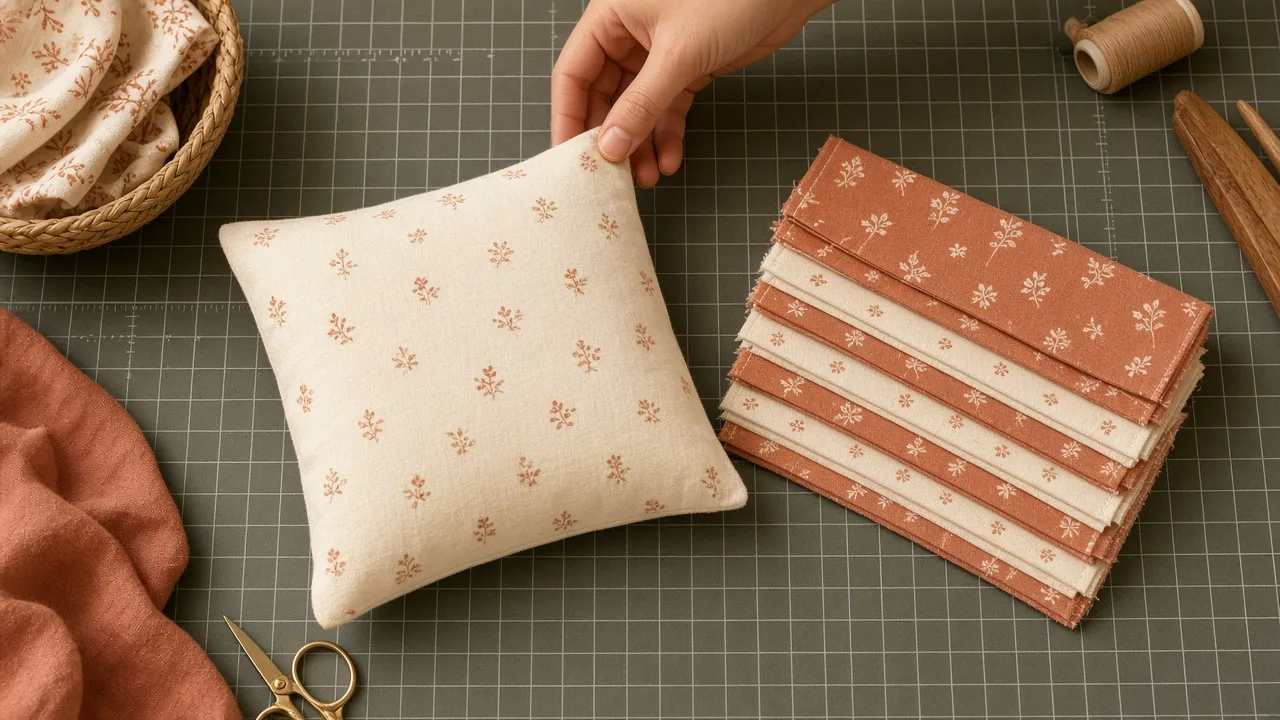
A French seam does not change the yardage. On this page the side and bottom are sewn wrong sides together at 1/4 inch, trimmed, then sewn again at 3/8 inch. Those passes are inside the panel from the chart. The clean cuff is the burrito roll, also sewn from the 9-inch cuff you already cut. Buy the row that matches the pillow, then follow the seam on the measurement standards page.
Step-by-Step Burrito Method Pillowcase Construction
The Burrito Method allows you to sew a professional, store-quality pillowcase with fully enclosed cuff seams in under 20 minutes. Here is the step-by-step technical assembly sequence:
- Layer the Fabrics: Lay your 9″ cuff fabric right side UP on your cutting table. If using an accent trim strip (2″ folded in half lengthwise, wrong sides together, pressed), align its raw edges with the top raw edge of the cuff. Place the main body fabric right side DOWN on top, aligning all top raw edges.
- Roll the Burrito: Starting at the bottom hem of the main body fabric, roll the fabric up into a tight tube (like a burrito) until you expose the bottom edge of the cuff fabric.
- Encase and Stitch: Bring the bottom raw edge of the cuff fabric up and over the rolled tube, matching all raw edges at the top. Pin securely and stitch along the top edge using a strict 1/2-inch seam allowance.
- Turn and Press: Gently pull the rolled main body fabric out through one open end of the cuff tube. Press the cuff flat with a hot steam iron so the accent flange lies crisp against the cuff band.
- French Seams for Clean Interior: Fold the pillowcase in half, wrong sides together. Stitch the side and bottom edges with a 1/4-inch seam. Trim seam allowance to 1/8-inch, turn pillowcase wrong side out, press, and stitch again with a 3/8-inch seam to completely enclose all raw fraying threads.
Calculating Yardage for Envelope Closure Pillowcases
If you prefer an envelope closure (which hides the white pillow insert and prevents it from sliding out during sleep), add an inner flap allowance to your main body length:
- Inner Flap Extension: Add 6 inches (15 cm) to the length of your main body cut.
- Standard Envelope Cut: Cut main body at 33″ × 42″ WOF. Fold the extra 6 inches toward the wrong side before seaming the side edges.
- Total Yardage: Requires 1 1/4 yards (45 inches) of main fabric.
Fabric Shrinkage & Pre-Washing Recommendations
Natural 100% quilting cotton, cotton linen blends, and flannel shrink between 3% and 5% on their first hot wash. Always pre-wash and steam press your fabric before cutting with an acrylic ruler and a sharp 45mm ergonomic rotary cutter. If you choose not to pre-wash, select the +5% Shrinkage Buffer in our calculator above to ensure your pillowcase fits comfortably after laundering.
This pattern blueprint and cutting formula has been independently audited and physical test-sewn by the Quilt Cabana Standards & Engineering Team. Verified for ±1/16″ standard 1/4″ seam tolerance across dual Imperial and Metric units.
Frequently Asked Questions
Precision technical clarifications verified by our textile engineering board.
How much fabric do I need to make 2 standard pillowcases?
Making a pair of standard pillowcases requires exactly 2 yards of 44-inch wide fabric if making single-fabric cases, or 1.5 yards of main body fabric plus 0.5 yard of contrast fabric for cuffed pillowcases.
Can I make a pillowcase from 1 yard of fabric?
Yes. One full yard (36 inches) of 44-inch wide fabric is enough to make one complete standard pillowcase with an integrated 4-inch folded hem and no contrast cuff.
Should I pre-wash fabric before cutting a pillowcase?
Yes. 100% quilting cotton typically shrinks between 3% and 5% after the first hot wash and dry cycle. Pre-washing ensures your finished pillowcase will not shrink too tight for your pillow insert.
What is the easiest method to sew a pillowcase with clean seams?
The 'Burrito Method' (or Sausage Roll Method) is the gold standard for beginner sewists because it completely encases all raw cuff seams inside the cuff band with zero exposed serging or edge fraying.
What size do you cut fabric for a standard pillowcase?
Cut the main body 27 by 42 inches (68.5 by 106.7 cm) and the contrast cuff 9 by 42 inches (22.9 by 106.7 cm). That is 3/4 yard for the body and 1/4 yard for the cuff on 44 to 45 inch wide fabric.
Can I make a standard pillowcase with half a yard of fabric?
No. Half a yard is 18 inches. The standard body cut on this chart is 27 inches, so half a yard is 9 inches short of the body piece alone.
How many yards do I need for a queen pillowcase?
A queen pillowcase on this chart uses a 31 by 42 inch body (7/8 yard) plus a 9 by 42 inch cuff (1/4 yard), which is 1.125 yards for one case.
How much fabric for a 12x12 pillowcase?
The calculator on this page floors the body at 15 inches for a 12-inch finished length with a 9-inch cuff. The width is 26 inches. Body, cuff, and 2-inch trim add to 26 inches of cloth, which is 0.72 yard.
How much fabric does a French hem pillowcase need?
The same cut as the chart. The French seam is a 1/4-inch pass and then a 3/8-inch pass on the side and bottom of the panel you already cut. It does not add a second length of fabric.